
Acupuncture for Breech Baby: How Moxibustion Can Help
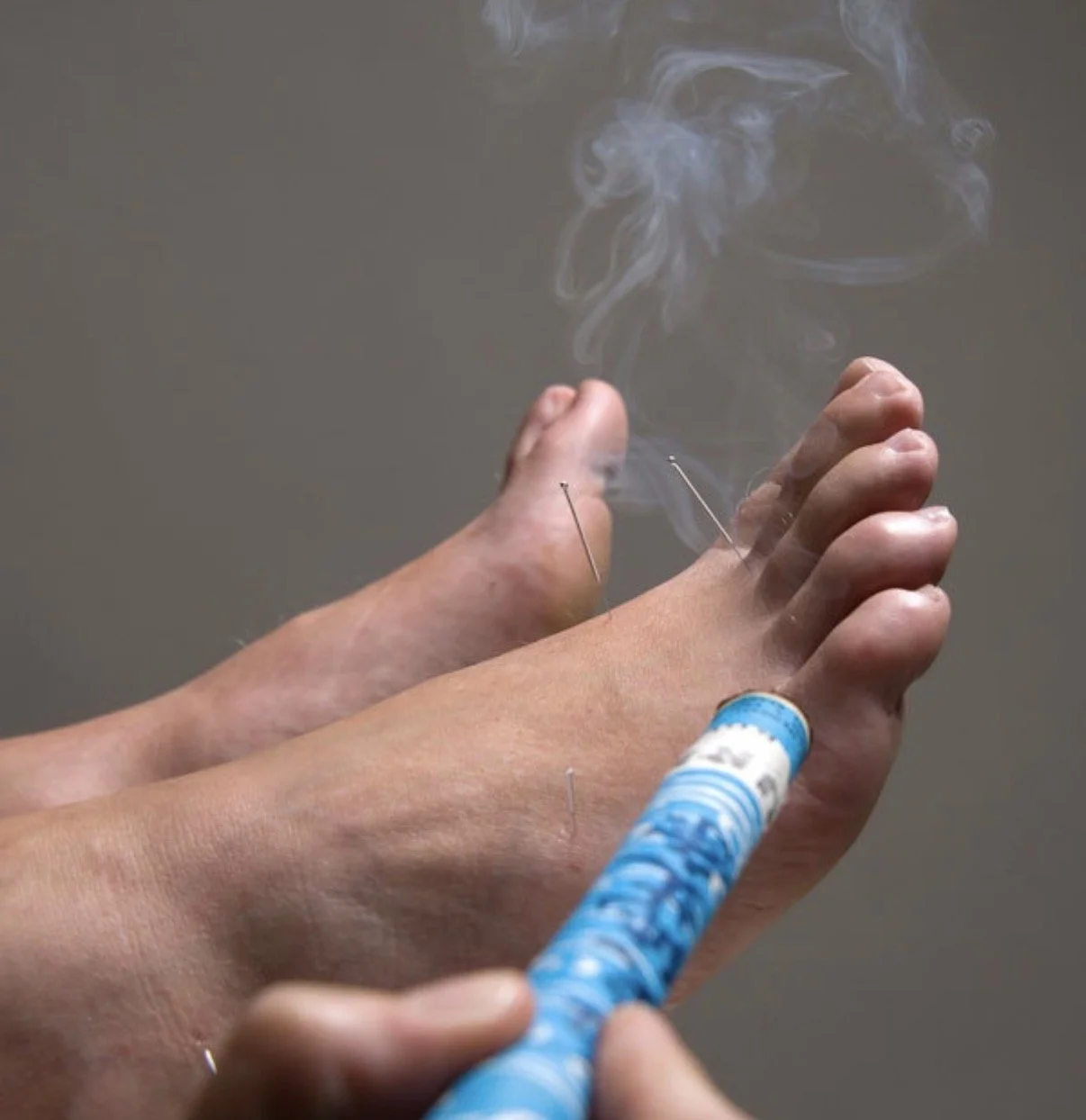
Acupuncture is commonly used to support breech presentation in the final weeks of pregnancy, and one of the most well-known techniques is moxibustion.
This article explains how moxibustion is used within acupuncture care to support babies turning head-down, when it’s usually recommended, and how it can be done safely alongside standard maternity care.
How moxibustion in acupuncture is used to support breech presentation
Imagine everything has been ticking along nicely in pregnancy. You’ve written your desired birth plan, you’re doing the appointments, everything feels on track… and then you get to that late-pregnancy check (often around 36 weeks) and your midwife says, “Baby’s breech.”
It can feel like someone’s just whipped your birth plan out of your hands. Suddenly your mind jumps to operating theatres and the words C-section. And even if you’re totally open-minded about how baby arrives, that “loss of control” feeling can be huge.
If you’re in that moment: take a breath. Breech is common enough, and you still have options - I’m here to help.
For those that know me, one of the most useful and honestly, my most loved tools that I use in clinic as part of pregnancy acupuncture is moxibustion, in particular for breech babies - a simple heat therapy you can learn and then do at home.
First: what does “breech” actually mean?
Breech just means baby is positioned bottom-down (or feet-down) rather than head-down (cephalic). At full term, around 3-4% of babies are still breech. (rcog.org.uk)
There are a few types (frank, complete, footling), but the main point is: if baby is still breech late on, your maternity team will talk you through the next steps.
What causes a baby to be breech?
Honestly, sometimes there’s no clear reason at all — and it’s worth saying that up front, because a lot of women immediately wonder if they’ve “done something wrong.” You haven’t.
That said, there are a few common things that can make breech more likely:
Multiples (twins, triplets etc.) - simply less room to manoeuvre.
If you’ve been pregnant before - baby may stay mobile for longer and settle later.
Amniotic fluid levels - too much can mean baby keeps turning; too little can mean baby can’t move as easily.
The shape of the uterus - for example fibroids, a uterine septum, or other structural differences can change the available space.
Placenta previa - when the placenta covers all or part of the cervix.
Prematurity - if baby is early, they may simply not have turned head-down yet.
Occasionally, baby-related factors - some foetal conditions can make turning more difficult.
Your midwife/scan team will usually check for the things that need checking - but most of the time, breech is just one of those pregnancy quirks.
What you’re usually offered (and where acupuncture moxibustion fits in)
If baby is breech at around 36 weeks, you’ll usually be offered an ECV (external cephalic version) - a procedure where a clinician uses gentle but firm pressure on your abdomen to try to encourage baby to turn. It can be uncomfortable, and it isn’t suitable for everyone, but it’s commonly offered and considered safe in the right setting. (nhs.uk)
This is where a lot of women tell me they feel stuck in “waiting mode.” Waiting for the next scan. Waiting to see if baby turns. Waiting to see if you “need” an ECV.
And that’s why I love breech moxibustion: it gives you something practical to do that is non-invasive, gentle, and often really reassuring.
A Chinese medicine perspective (a little theory, in normal English)
In Chinese medicine we don’t just look at where baby is sitting - we also look at what might be making it harder for baby to settle head-down.
One of the key systems we talk about in pregnancy is the Kidneys. Now, this isn’t the same as “kidneys” in a western medical sense. In Chinese medicine, “Kidney energy” is more like your deep reserves: your constitutional strength, your ability to nourish pregnancy, and the overall support system for the uterus. When those reserves are a bit depleted - which can happen in late pregnancy simply because growing a baby is a huge job — we sometimes see the uterus lacking the kind of “active warmth” and movement that helps baby turn and nestle into position.
So when Chinese medicine practitioners talk about breech being linked to a Kidney deficiency pattern, it’s not meant as doom and gloom - it’s a way of saying: let’s support your reserves and encourage the right kind of activity in the uterus so baby has the best chance to turn.
A passage I’ve always liked (because it explains the timing beautifully) comes from Deadman et al. (1998). They describe how pregnancy is dominated by yin - the nourishing, building side - and then, as birth approaches, yang needs to rise: the warming, moving, “let’s get things shifting” side. If, close to term, there isn’t enough of that yang activity in the uterus — whether from deficiency or stagnation - then it can be helpful to stimulate it.
And this is where moxibustion is such a neat fit: moxa is warmth, and warmth is one of the simplest ways we have in Chinese medicine to encourage that healthy “moving and turning” process, especially at the specific point we use for breech.
What is breech moxibustion?
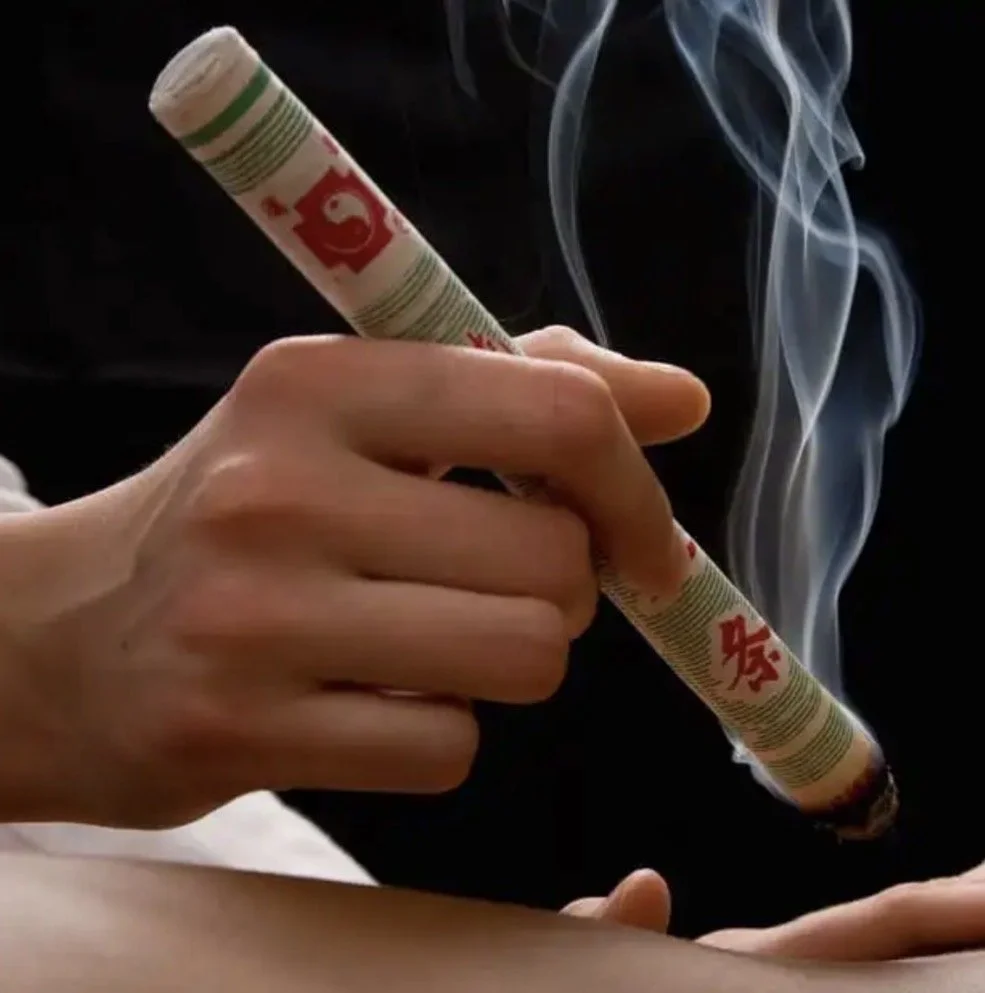
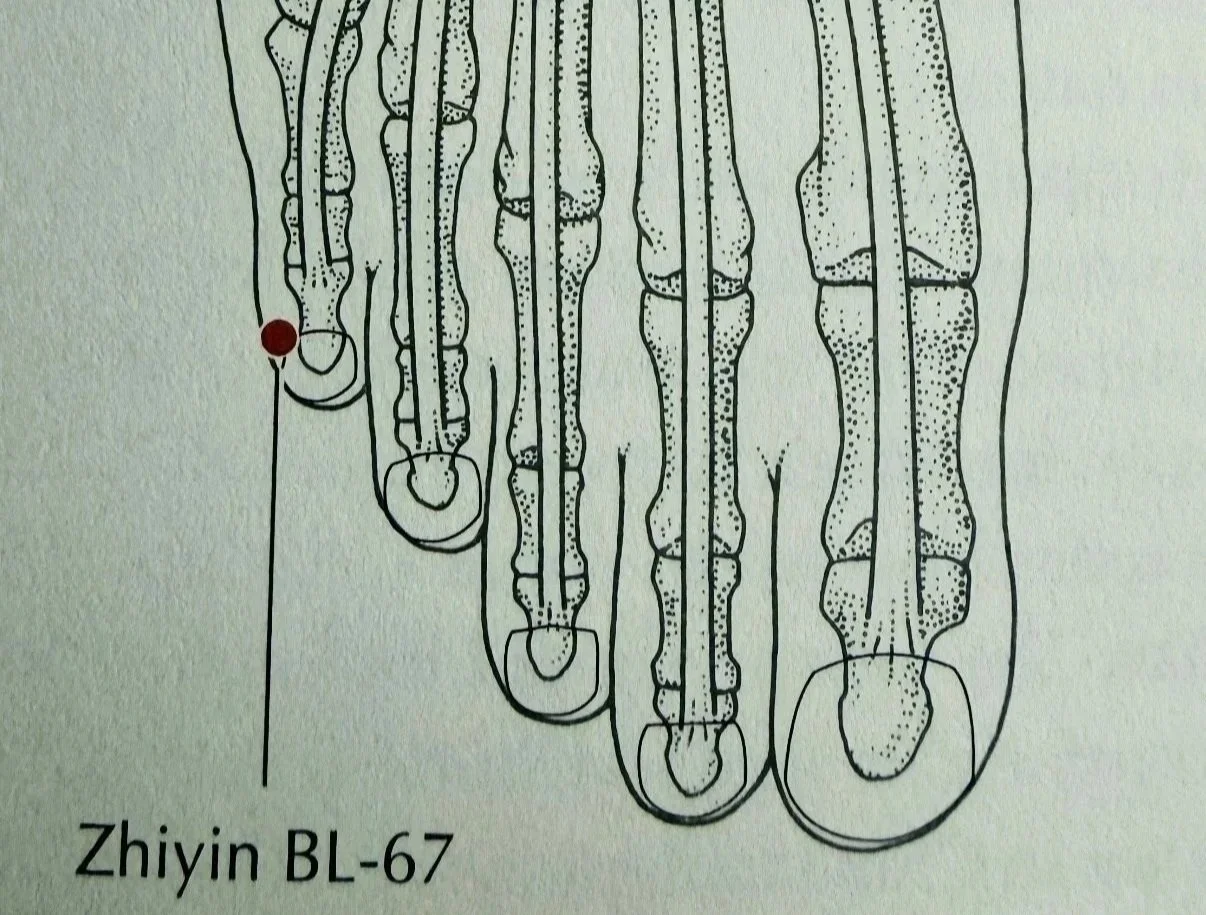
Moxibustion uses gentle heat from a moxa stick (traditionally mugwort) to warm specific acupuncture points. For breech, the main point is Bladder 67 (BL67 / Zhiyin) - right on the outer corner of the little toe. This is the classic “breech point.”
And yes, it’s always funny that it’s by the baby toe - but it’s also one of those moments where Chinese medicine is beautifully simple.
Does acupuncture and moxibustion for breech actually work?
The best overall summary comes from a Cochrane Review (2023), which found moderate-certainty evidence that moxibustion plus usual care probably reduces the chance of baby being non-head-down at birth. In plain English: it likely increases the chance of baby being head-down by the time you give birth.
It’s not a guarantee - and I would never sell it that way - but it’s a legitimate option, and many women love that it’s something they can actively do. Personally in clinic I’ve also experienced good results from my clients reporting back.
How I work with you
My approach is simple and supportive. I usually see you once to:
check where you are in pregnancy and what your midwife/scan has shown
make sure moxa is appropriate for you
show you exactly how to do it safely
send you away feeling confident (and with a clear plan)
I use smokeless moxa sticks because most people prefer them - traditional moxa can be very smoky and the smell lingers.
WHAT MY CLIENTS SAY…
“I went to Deborah (on recommendation from a local parents' WhatsApp group) when I'd found out my baby was breech at 36 weeks. The experience of the scan etc. hadn't been very nice so it was great to go and have a relaxing massage, acupuncture and moxibustion with Deborah.
She was very reassuring and level headed. The baby did turn which is an added bonus!"
- Inez Gordon
The home plan (simple and doable)
The usual approach is:
moxa to BL67 on both little toes
20 minutes once a day
for 10 days
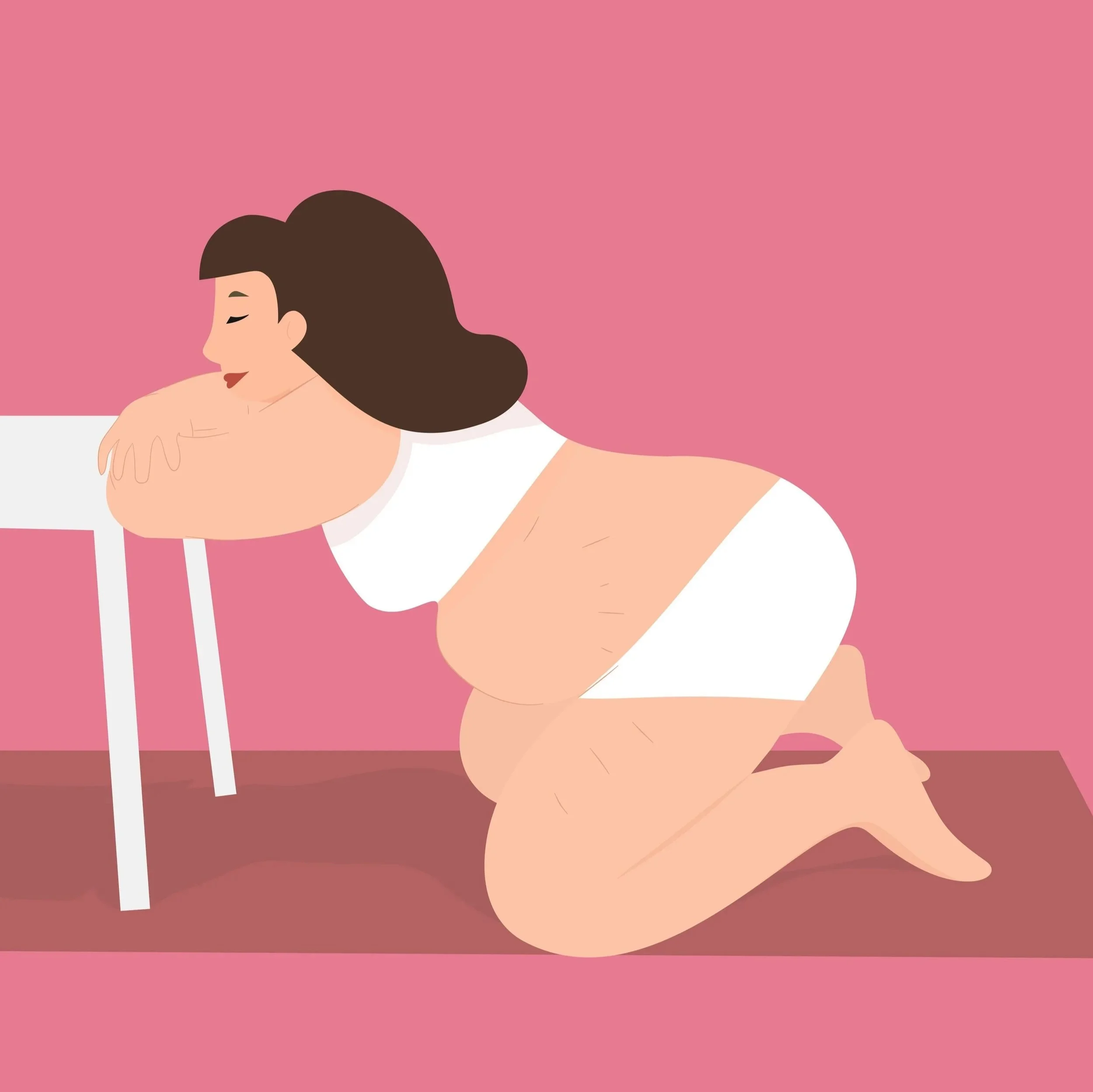
You sit comfortably, or 4-point kneeling so gravity can play a part and wear loose clothing. You or your partner hold the moxa close enough that you feel a strong warmth that becomes uncomfortably hot, then you move it away briefly and alternate between toes to keep that “peaking warmth” going for the full session. That “just-too-hot” moment is important - it activates the point - but you should never burn yourself.
Timing-wise: Ideally, it’s best to start this around 34-36 weeks if possible. If you show up later (even 38–39 weeks), it’s definitely worth trying depending on your situation, please call me to discuss.
And in my own practice, I find it’s really important to complete the full 10 days, even if baby seems to have turned part-way through. My aim isn’t just to get baby moving - it’s to encourage baby to move into the best position and stay there.

Spinning Babies (and my “many angles” approach)
I’m a big fan of approaching breech from more than one direction.
A lot of women also use Spinning Babies® (developed by midwife Gail Tully) - it’s a set of positions and movements designed to encourage better balance, space, and baby’s ability to settle into an optimal position.
Some people love structure and will happily follow a daily routine. Others prefer to pick a couple of simple things they can actually keep up with. Both are fine.
The old-fashioned tip I still recommend
And honestly? Don’t underestimate the classics. If you want something easy to try at home (and it’s comfortable for you), you can do the hot/cold trick:
put a bag of frozen peas at the top of your bump
and a hot water bottle low down (so baby is gently encouraged towards the warmth)
Is it a guaranteed scientific method? No.
Have plenty of women tried it and felt like it helped (or at least helped them feel they were doing something)? Yes.
Safety (quick but important)
Because this is pregnancy care:
keep your midwife/obstetric team in the loop
moxa should never be hot enough to burn - technique matters
if you have pain, bleeding, reduced fetal movements, or anything that worries you, stop and contact your maternity unit
If you’re feeling wobbly about it…
A breech diagnosis can feel like the rug has been pulled out from under you. My job is to help you feel informed, supported, and like you’ve got a plan - not just a list of appointments.
At Deborah Warden Acupuncture & Massage, we specialise in pregnancy and women’s health support. So, if you’d like support with breech moxibustion (and acupuncture where appropriate), you’re very welcome to come in. I’ll show you exactly what to do, you’ll go home with a simple routine, and we’ll work alongside your maternity care.
(This post is educational and not a substitute for personalised medical advice. Always follow the guidance of your midwife or obstetric team.)
Sources:
Debra Betts: The essential guide to Acupuncture in Pregnancy & Childbirth, edited by Peter Deadman & Inga Heese, The Journal of Chinese Medicine 2006
Cleveland Clinic: https://my.clevelandclinic.org/health/diseases/21848-breech-baby
Royal Clinic of Obstetricians & Gynanecologists: https://www.rcog.org.uk/for-the-public/browse-our-patient-information/breech-baby-at-the-end-of-pregnancy
NHS: https://www.nhs.uk/pregnancy/labour-and-birth/if-your-baby-is-breech
Cochrane Library: By Meaghan E Coyle, Caroline Smith, Brian Peat “Cephalic version by moxibustion for breech presentation.” 9 May 2023 https://doi.org/10.1002/14651858.CD003928.pub4